

Distribution Operations · CASE STUDY
From spreadsheet-based distribution workflows to a structured transaction system.
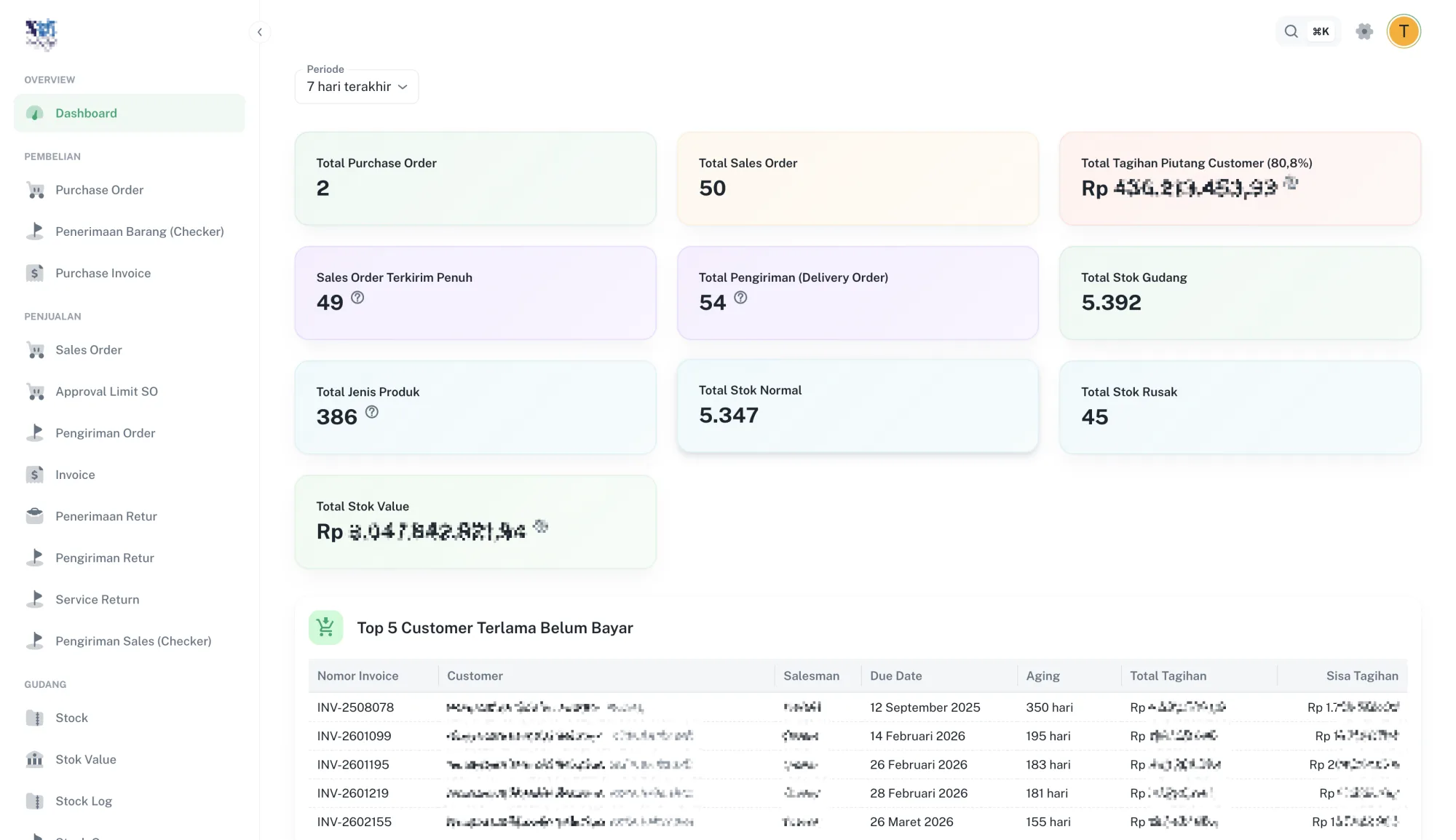
NJS is a management system for an electronics distribution business. It was shaped around operational workflows that previously relied heavily on spreadsheets, bringing master data, purchasing, sales, stock checks, invoices, payments, and reporting into one system.
- Project Type
- Business System
- Focus
- Distribution Operations
- Demo
- No public demo available
OVERVIEW
Business Context
Distribution operations involve connected transactions: a purchase order affects incoming goods, sales affect delivery and stock, and invoices with partial payments need to stay connected to their original transaction.
The Challenge
The prior Excel-based workflow struggled with access roles, item tracking, stock checking, duplicated data, and consistent transaction reporting.
SYSTEM
What was designed and built.
Master Data
- Users
- Customers
- Positions
- Departments
- Products
- Brands
- Suppliers
- VAT
- Company profile
Purchase
- Purchase order
- Partial inbound
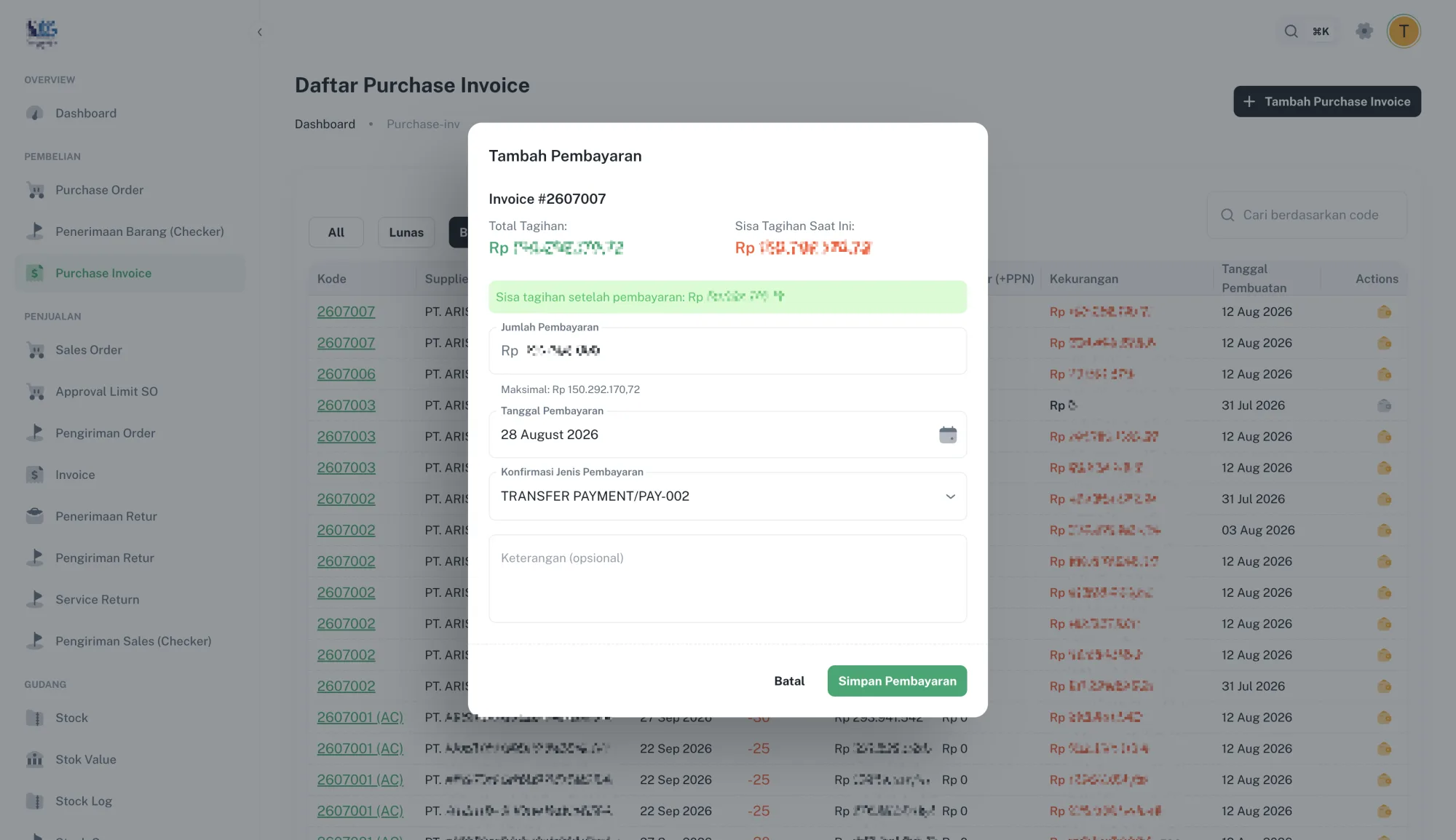
- Invoice
- Partial payment
Sales
- Sales order
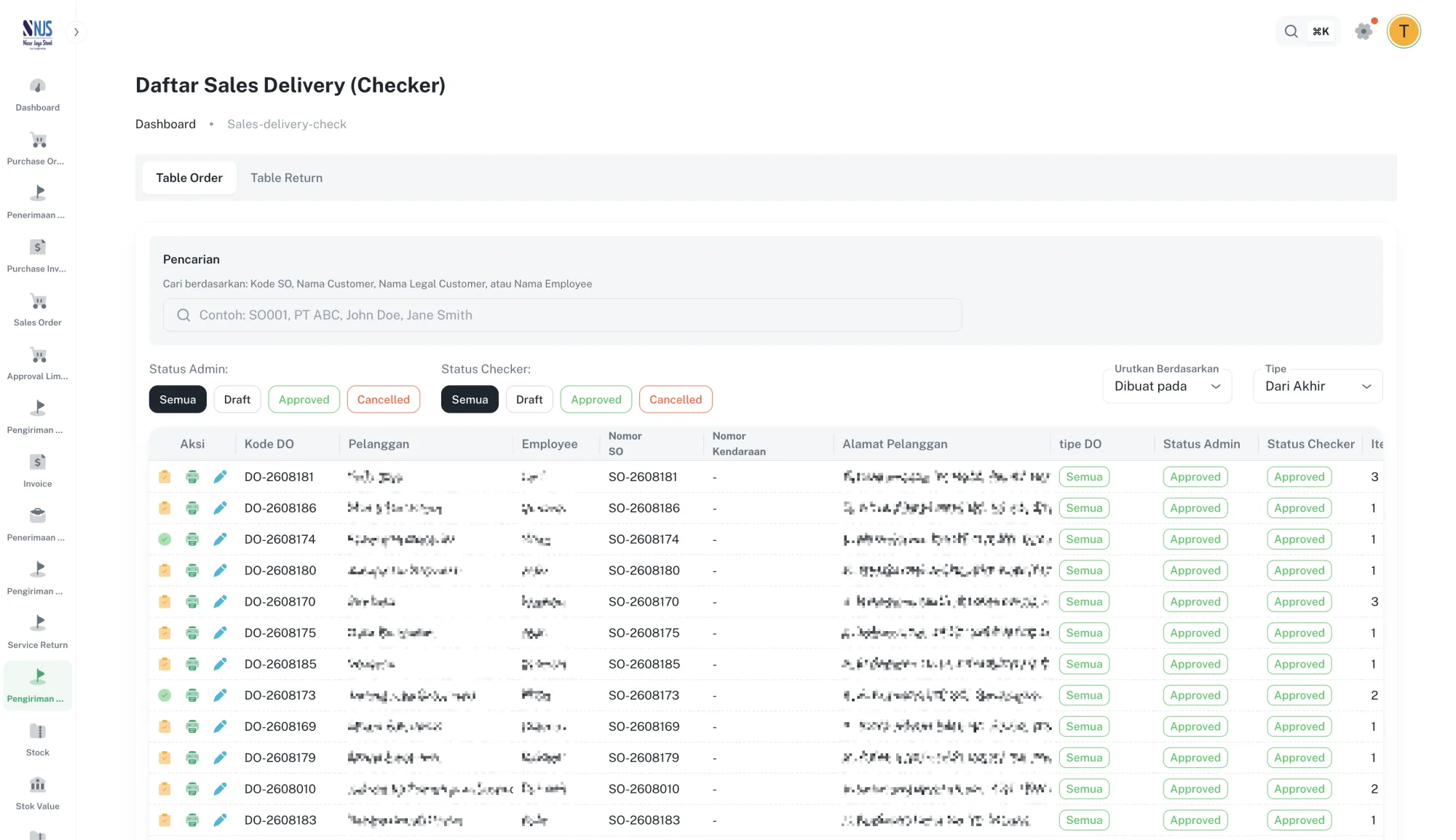
- Delivery
- Invoice
- Return
- Partial payment
Reporting / Operational Visibility
- Transaction reporting
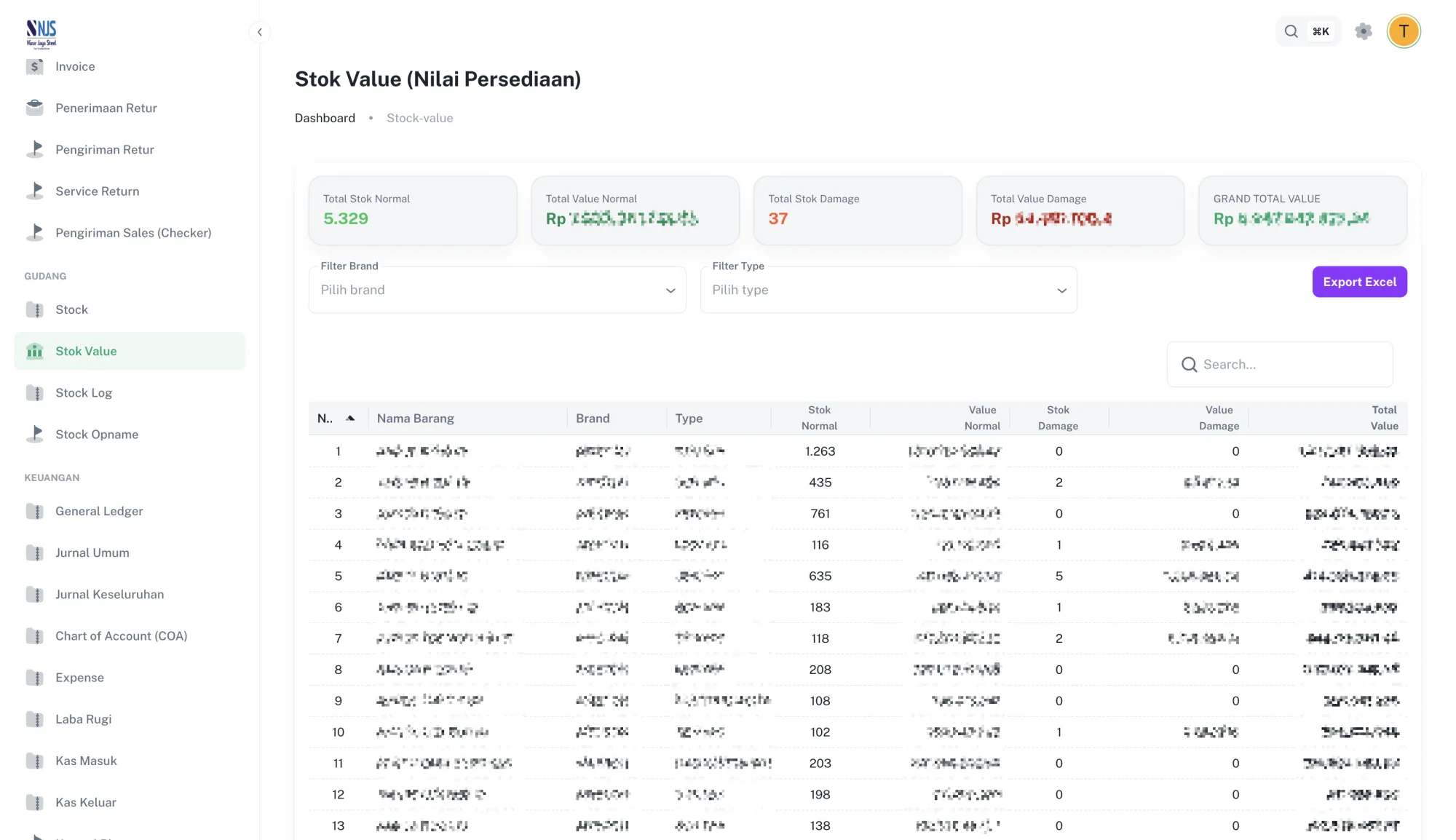
- Item / stock visibility
- Consistent data across workflows
Main Workflow
Purchase
- Purchase order
- Partial inbound
- Invoice
- Partial payment
Sales
- Sales order
- Delivery
- Invoice
- Return / payment
Shared data
- Product
- Customer
- Supplier
- Stock
- Reporting
GALLERY
More of the system.
WHAT THIS CASE DEMONSTRATES
Capability shown by this project.
- Workflow mapping
- Transactional system design
- Data relationships across modules
- Operational visibility beyond CRUD forms